
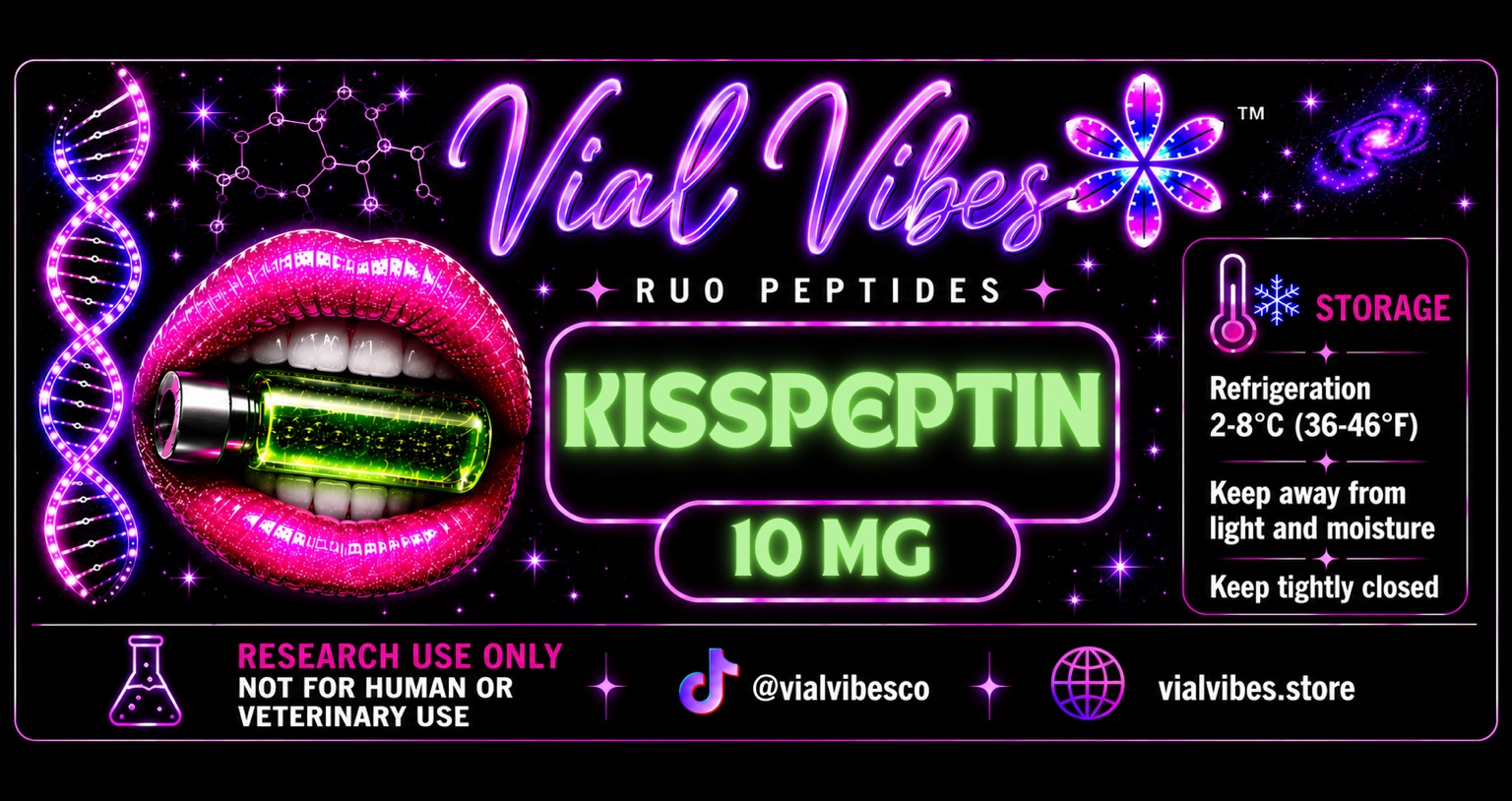
Description
Research Snapshot
What it is:
Kisspeptin is a naturally occurring peptide studied for its central role in neuroendocrine signaling and the regulation of the hypothalamic-pituitary-gonadal (HPG) axis. Researchers investigate Kisspeptin to better understand hormone signaling, receptor biology, and reproductive physiology.
Researchers study it for:
- Neuroendocrine signaling
- Hormone regulation
- Reproductive physiology
- Peptide signaling
- Molecular endocrinology
Target pathway(s):
KISS1 Receptor (KISS1R) • Hypothalamic-Pituitary-Gonadal (HPG) Axis • Neuroendocrine Signaling
What Is Kisspeptin?
Kisspeptin is a naturally occurring peptide that serves as an important signaling molecule within the neuroendocrine system. In laboratory research, scientists study Kisspeptin to better understand how peptide signaling coordinates communication between the brain and endocrine system through the hypothalamic-pituitary-gonadal (HPG) axis.
Researchers use Kisspeptin as a valuable tool for investigating receptor biology, hormone signaling, and the molecular mechanisms involved in normal physiological regulation. Ongoing laboratory studies continue to expand scientific understanding of neuroendocrine communication and endocrine physiology.
Research Spotlight
Current scientific research investigates Kisspeptin in relation to:
- Neuroendocrine physiology
- KISS1 receptor biology
- Hormone signaling
- Hypothalamic-pituitary-gonadal (HPG) axis function
- Reproductive physiology
- Peptide signaling
- Molecular endocrinology
- Cellular communication
Through controlled laboratory investigation, Kisspeptin continues to provide valuable insight into neuroendocrine signaling and endocrine physiology. Ongoing scientific research contributes to a growing understanding of hormone regulation, receptor biology, and the complex molecular pathways that coordinate normal physiological function.
Reviews
There are no reviews yet.