
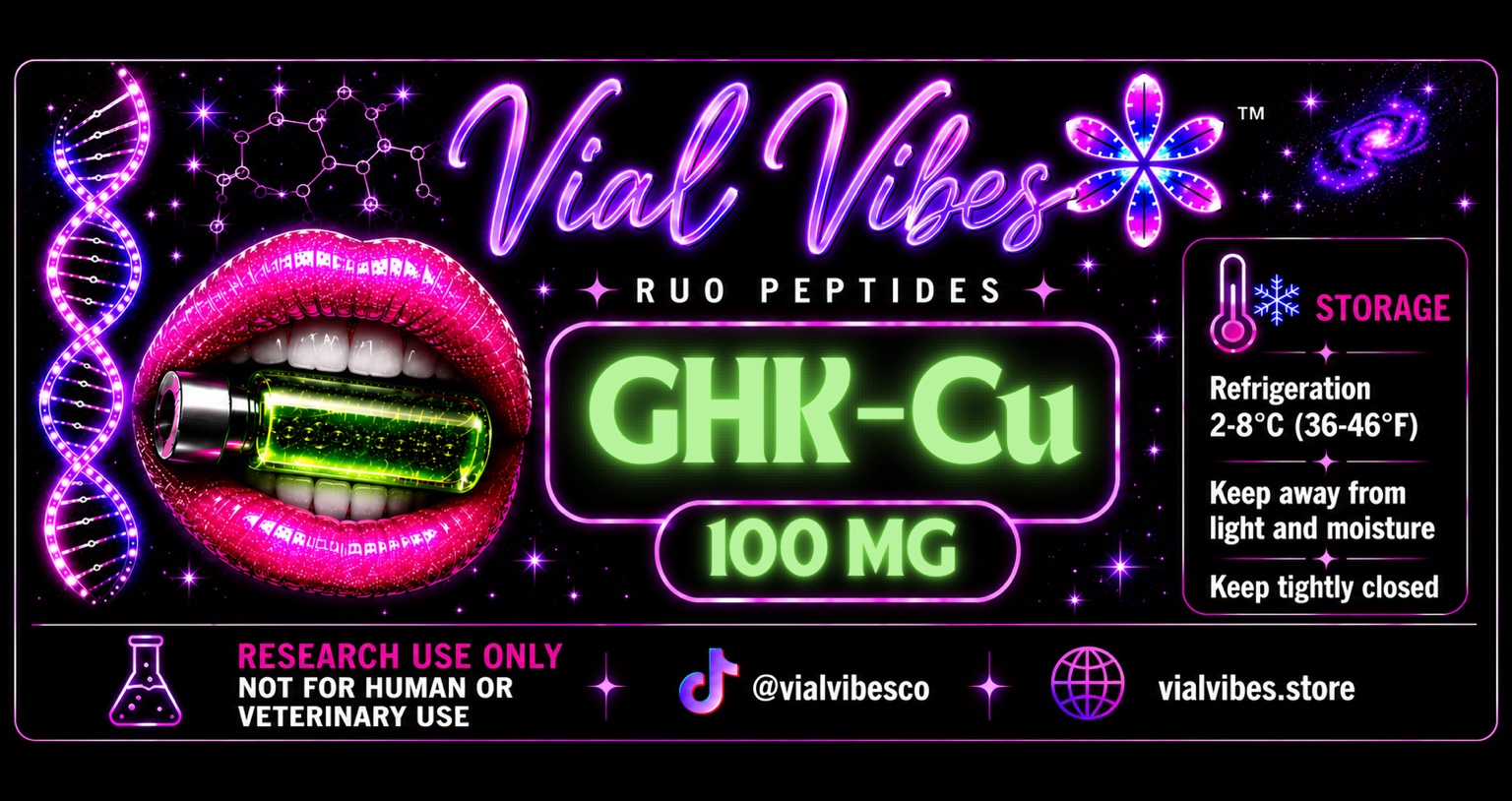
Description
Research Snapshot
What it is:
GHK-Cu is a naturally occurring copper-binding tripeptide studied for its role in cellular communication, extracellular matrix biology, and tissue physiology. Researchers investigate GHK-Cu to better understand peptide signaling, copper homeostasis, and the molecular mechanisms involved in normal cellular function.
Researchers study it for:
- Extracellular matrix biology
- Cellular signaling
- Tissue physiology
- Copper peptide biology
- Molecular biology
Target pathway(s):
Copper Peptide Signaling • Extracellular Matrix Biology • Cellular Communication
What Is GHK-Cu?
GHK-Cu is a naturally occurring tripeptide that binds copper ions and is widely studied in peptide and molecular biology research. Researchers utilize GHK-Cu to investigate peptide signaling, cellular communication, and the biological processes involved in normal tissue physiology and extracellular matrix function.
As one of the most extensively researched copper peptides, GHK-Cu serves as a valuable laboratory tool for exploring receptor biology, molecular signaling, and the complex interactions that regulate cellular activity. Ongoing scientific investigation continues to expand our understanding of copper peptide biology and normal physiological processes.
Research Spotlight
Current scientific research investigates GHK-Cu in relation to:
- Copper peptide biology
- Extracellular matrix biology
- Cellular communication
- Tissue physiology
- Molecular biology
- Peptide signaling
- Cell biology
- Biomolecular research
Through controlled laboratory investigation, GHK-Cu continues to provide valuable insight into peptide signaling, copper biology, and the molecular pathways involved in normal cellular function. Ongoing scientific research contributes to a broader understanding of extracellular matrix biology, cellular communication, and tissue physiology.
Reviews
There are no reviews yet.